Pest Control Service Gulfport homeowners select establishes a durable, targeted perimeter boundary around foundation walls and crawl spaces to stop persistent coastal infestations before they breach the building envelope. Property owners looking for pest control service near me receive structured evaluations tailored directly to South Mississippi humidity patterns, dense soil moisture, and seasonal pest pressures.
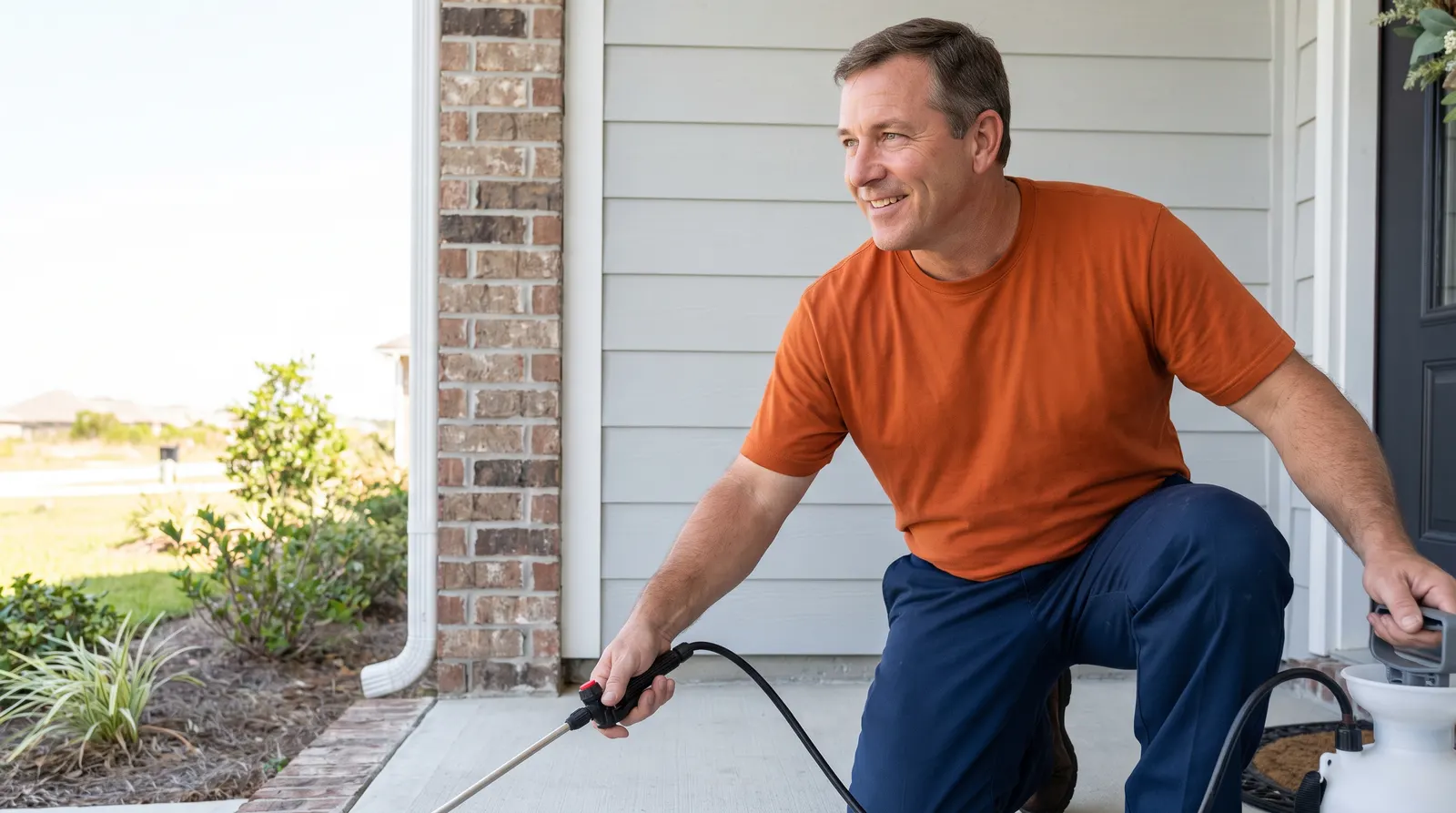
Pest control service in Gulfport is an exterior-focused biological and chemical mitigation protocol designed to intercept coastal insects, termites, and rodents before they enter living structures across Harrison County.
Every service reflects the same meticulous attention to detail, whether it's a single job or a larger pest control service project across Gulfport.
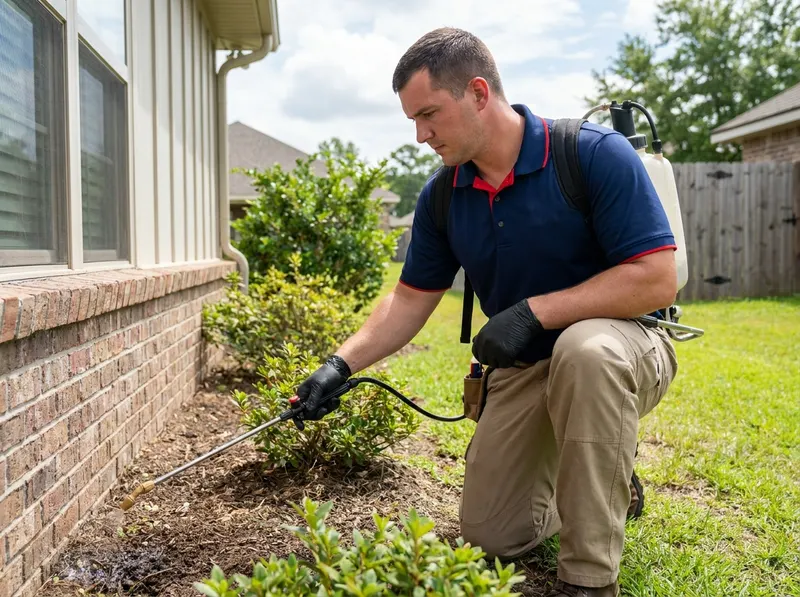
Creates a continuous chemical and micro-granular boundary applied three feet up foundation stem walls and six feet out across landscaping beds to intercept American cockroaches, earwigs, silverfish, and perimeter ants before they reach entry thresholds. Technicians treat weep holes, plumbing stub-outs, and window casing perimeters using non-staining micro-encapsulated suspensions engineered to withstand southern coastal sun degradation and high ground moisture. By intercepting foraging insects on exterior ground substrates, this protocol prevents indoor structural colonizations without broadcasting broad-spectrum residual insecticides onto living space floorboards or interior baseboard trims.
Get a quote →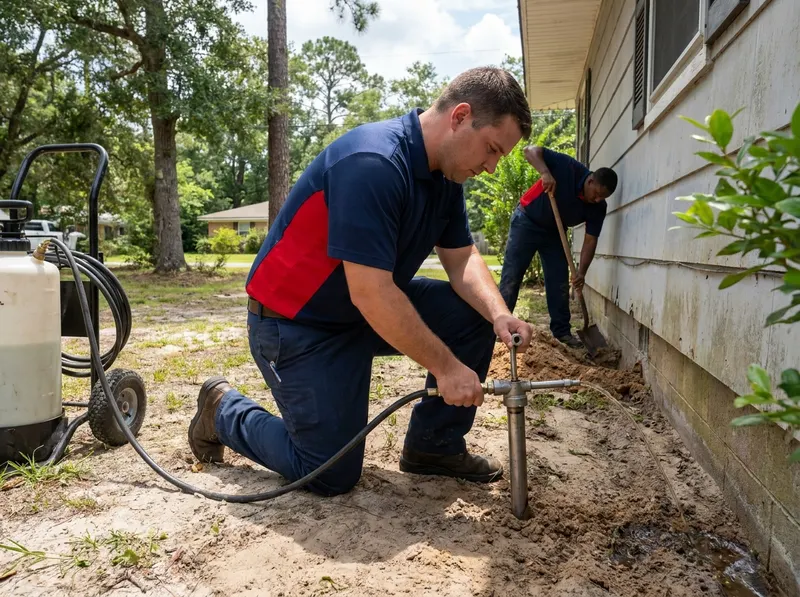
Involves trenching, rodding, and bait station installation along exterior structural perimeters to disrupt subterranean termite colonies foraging through humid sandy-loam soils toward floor joists and framing studs. Technicians dig continuous four-inch to six-inch trenches directly abutting foundation perimeters, applying non-repellent liquid termiticides that foraging worker termites unknowingly transport back into central subterranean nesting galleries. In properties where exterior slab concrete, aggregate driveways, or paver patios contact exterior wall lines, sub-slab drilling ensures continuous chemical soil coverage, shutting down concealed colony entry points.
Get a quote →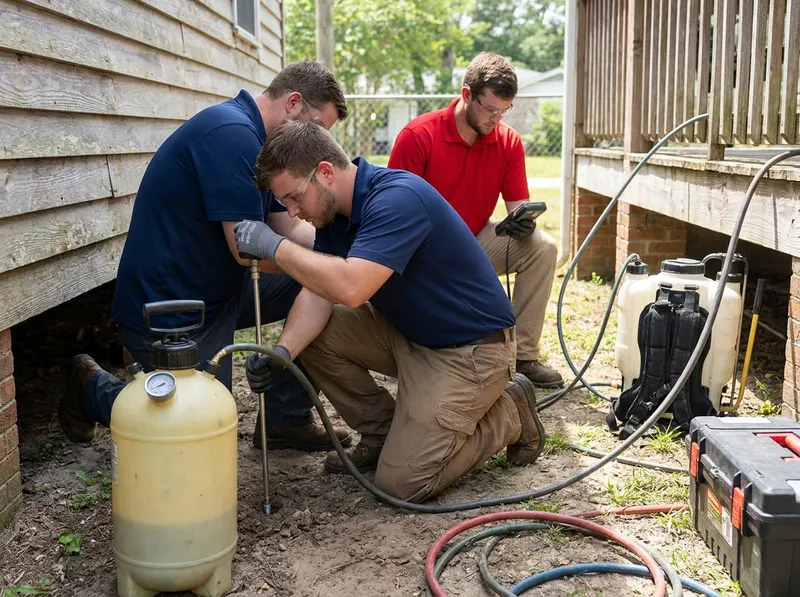
Deploys targeted chemical barriers, foam void injection, and high-potency cellulose baiting matrix arrays designed to counter aggressive, large-colony Formosan subterranean termites (Coptotermes formosanus). Because Formosan super-colonies consume structural framing rapidly and construct aerial carton nests within wall cavities independent of ground contact when secondary moisture sources exist, technicians inspect rooflines, fascia boards, and exterior window headers, applying expanding structural foams directly into infested voids alongside low-profile perimeter interception stations spaced at rigorous 10-foot intervals.
Get a quote →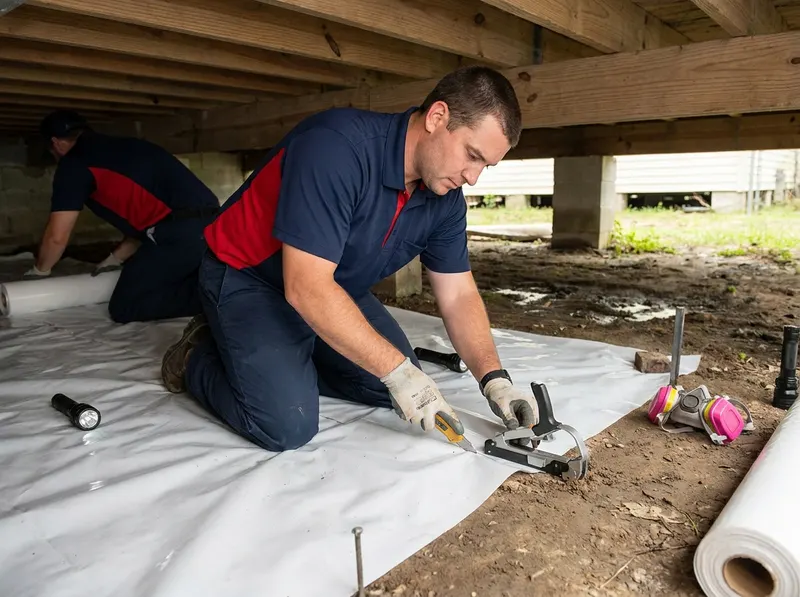
Applies targeted borate structural timber treatments, sub-slab moisture barrier protections, and focused micro-dusting in pier-and-beam foundations to stop wood-decay fungi, dampwood roaches, and structural moisture pests. Technicians coat accessible sills, subfloor joists, and rim timbers with deep-penetrating disodium octaborate tetrahydrate solutions, which permanently embed into cellular wood fibers to prevent timber-destroying beetles and damp-environment insect feeding while treating damp earth surfaces beneath moisture-rated containment membranes.
Get a quote →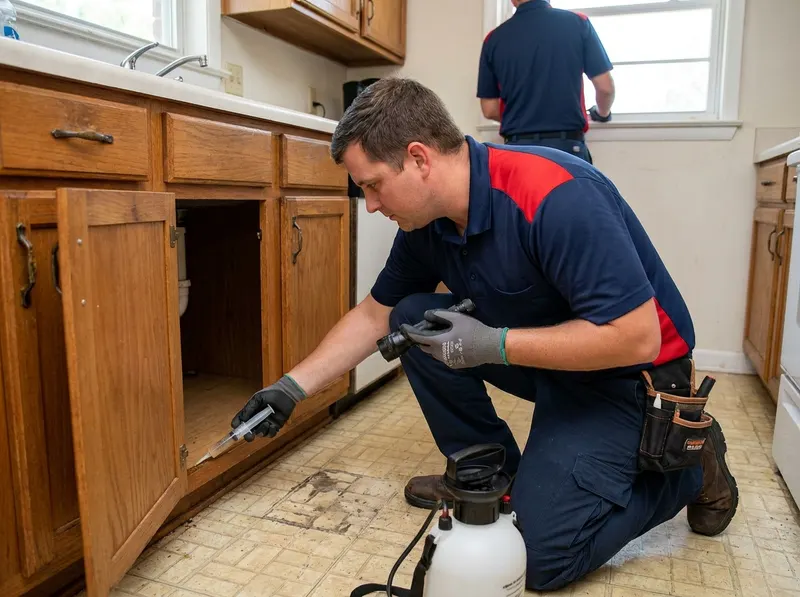
Utilizes target-specific insect growth regulators, precision bait matrices, and vacuum extraction for German cockroaches in kitchens or perimeter barrier exclusion for outdoor smokybrown and palmetto roaches. German cockroach protocols systematically dismantle nesting harborages inside kitchen cabinet hinges, motor housings of electrical appliances, and sub-counter voids using targeted micro-gel placements that disrupt life-cycle molting without airborne aerosol residues, while exterior smokybrown protocols target outdoor pine straw beds, mulch zones, and roofline gutter accumulations.
Get a quote →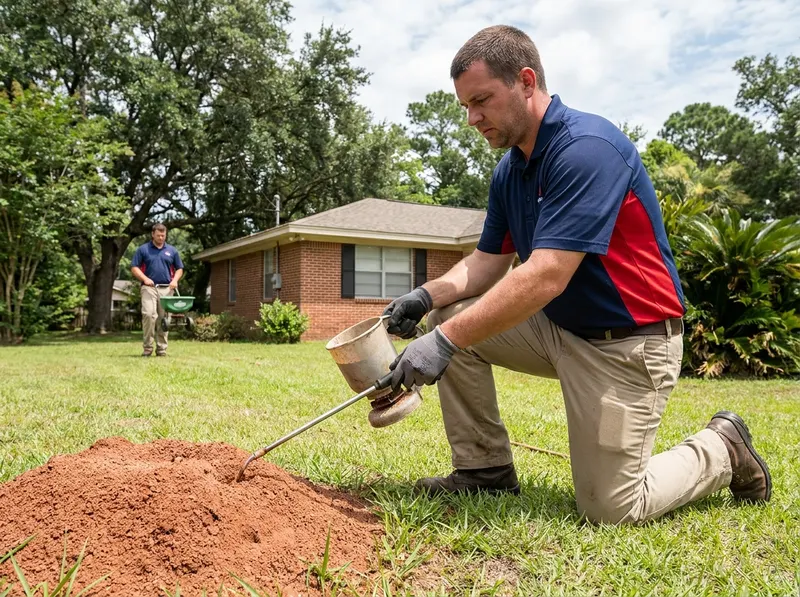
Delivers broadcast micro-encapsulated bait across turf zones combined with direct mound drenching to shut down queen reproduction across turfgrass and landscape boundaries for four to six months. Technicians apply low-dose biological insect development inhibitors during active morning and late-afternoon foraging windows when ambient soil temperatures sit between 70°F and 90°F, allowing foraging worker ants to carry bait granules deep into subterranean gallery networks to terminate the egg-producing queen without scalding structural turfgrass.
Get a quote →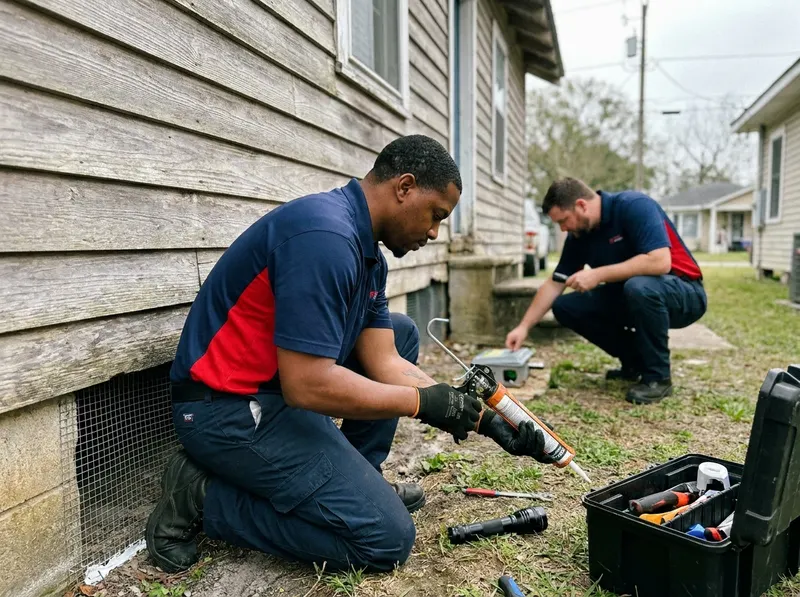
Seals exterior structural gaps larger than one-quarter inch using heavy-gauge galvanized steel mesh, copper mesh, and elastomeric sealants alongside interior multi-catch trapping in attic and crawl spaces. Technicians systematically map out soffit intersections, AC line-set penetrations, crawl space vent integrity, and roofline transition points, installing permanent physical mechanical barriers that deny roof rats (Rattus rattus) and house mice access to structural insulation while removing existing rodent populations using un-baited mechanical catch traps.
Get a quote →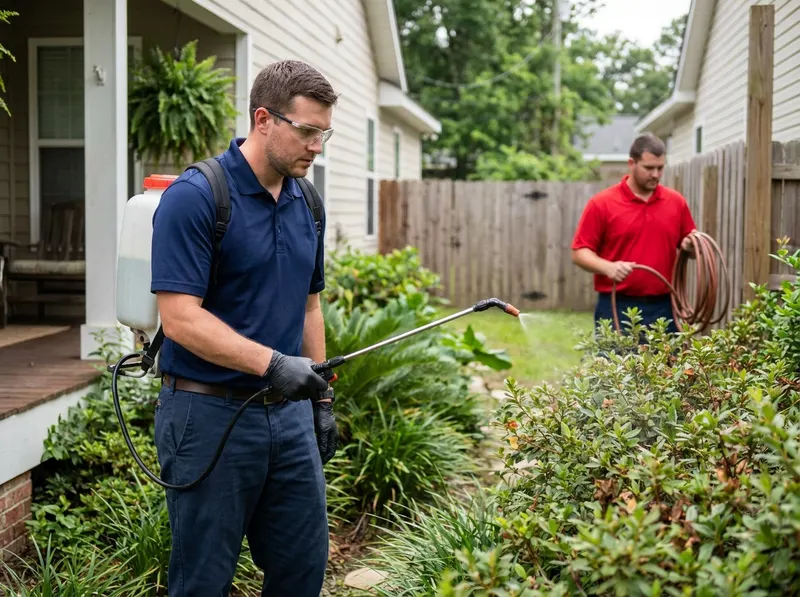
Treats perimeter foliage resting zones, ornamental shrubs, and underside deck canopies with botanical micro-droplet residual knockdowns and biological larvicides in standing water catchment zones. Technicians employ specialized backpack mist-blowers to distribute fine micro-droplets directly to the underside of broad-leafed plants, dense hedgerows, and sheltered structural soffits where adult mosquitoes harbor during daylight heat, concurrently treating landscape drains and low-lying ground depressions with microbial Bacillus thuringiensis israelensis (BTI) rings.
Get a quote →You get a firm, itemized quote for your pest control service before any work begins, no surprises, no pressure.
Careful prep, tidy work, and a full cleanup when we are done. We treat your home and belongings like our own.
The same trusted, background-checked team from the first call to the final check.
Selecting appropriate pest defense depends directly on the biological target, the structural foundation, and localized moisture levels around the structure. If the issue is routine damp-wood roaches, smokybrown cockroaches, or nuisance perimeter ants seeking water, choose a comprehensive exterior perimeter defense program that places an insecticidal barrier three feet up the foundation wall and six feet out across the soil; the trade-off is that exterior barrier maintenance requires renewal every 60 to 90 days due to Gulf Coast rainfall. If the property exhibits structural wood damage, mud exploratory tubes along crawl space piers, or discarded alate wings on interior windowsills between late March and June, choose targeted subterranean termite baiting or liquid trench barrier treatment; the trade-off is a higher initial technical investment starting at $200 and reaching up to $1,800 depending on linear footage, which addresses wood-destroying organisms but leaves flying garden insects unaffected.
If German cockroaches or rodents have established breeding colonies inside interior wall voids, subflooring, or behind kitchen refrigeration units, choose interior void injection combined with exterior exclusion; the trade-off is requiring strict structural sanitation and pantry isolation during the initial two-week curative cycle, whereas perimeter-only treatments operate entirely outside without disrupting daily indoor household routines. When dealing with raised pier-and-beam foundations typical of older residential architecture throughout South Mississippi, moisture accumulation beneath the subfloor frequently creates an isolated micro-climate where wood-decay fungi, dampwood termites, and silverfish flourish concurrently; in these structural conditions, an open exterior perimeter application alone leaves the sub-structure vulnerable, requiring property owners to select comprehensive crawl space timber borate treatments and soil encapsulation barriers instead of surface lawn treatments. Conversely, modern monolithic concrete slab properties throughout expanding residential subdivisions face subterranean termite penetration through concealed expansion joints, bath traps, and plumbing penetrations buried under slab concrete; for these properties, exterior perimeter non-repellent termiticide trenching or precision monitoring bait station arrays placed every 10 to 15 linear feet offer complete structural interception, whereas crawl space fogging would deliver zero defensive benefit.
Property managers managing multi-unit housing or seasonal rental assets along waterfront corridors must balance treatment longevity with immediate guest safety; choosing scheduled micro-encapsulated exterior perimeter re-applications every 60 days provides continuous knock-down against American cockroaches, fire ants, and stinging insects without ever requiring interior unit access, pesticide odors inside living suites, or scheduling coordination around tenant turnover.
Every project gets a firm, written price after a free on-site visit. Ranges below for orientation.
Tell us about your pest control service job and we'll send a clear, written quote, usually the same day. Or just call and talk to a real Gulfport pro.
(228) 351-2704
Gulfport homes contend with intense sub-tropical moisture driven by the Mississippi Sound and high local water tables near Bernard Bayou, Turkey Creek, and the Industrial Canal waterways. Heavy seasonal precipitation exceeding 65 inches annually rapidly dilutes low-grade pesticide sprays, while prevailing humidity levels regularly staying above 75% accelerate subterranean termite foraging and drive large smokybrown and American cockroaches indoors from dense live oak and slash pine canopies. Properties positioned near coastal sea-level corridors between U.S. 90, 28th Street, Dedeaux Road, and Interstate 10 require specialized, water-insoluble micro-encapsulated perimeter barriers specifically formulated to anchor tightly to saturated coastal soils and warm masonry foundation footings without washing away during heavy southern Mississippi downpours. Historic elevated structures near Handsboro and Soria City frequently experience excessive ground humidity beneath open crawl spaces, creating an ideal breeding habitat for wood-boring beetles and moisture ants, whereas slab-built developments near Orange Grove, Landon, and Florence Gardens face persistent subterranean soil termite pressure through expansion joints and perimeter weep holes. Addressing these distinct coastal conditions requires insecticidal compounds engineered with high soil-adsorption ratings, preventing active chemical dilution when wet ground conditions persist across Harrison County from early spring through late autumn.
Free estimates for Gulfport & the surrounding area.
 Lunexa Pest Defense